

PCT Jobs A Practical Guide to Starting Your Patient Care Technician Career

Introduction: Why PCT Jobs Are the Gateway to a Rewarding Allied Health Career
Have you ever wanted a healthcare job that lets you help people every day without spending years in medical school? You are not alone. More people than ever are looking for patient care technician roles, and for good reason.
Allied health professions are growing fast right now. In fact, they are among the fastest-growing job categories in the country. The demand for PCTs keeps rising because our population is getting older and more people have access to healthcare services than ever before. Hospitals, clinics, and nursing homes all need skilled technicians who can step in and provide direct patient support Patient Care Technician: A Career Guide – Health Tech Academy.
Here is the thing. You do not need a four-year degree to start your career in this field. PCT jobs offer a clear entry point with a low barrier to entry. Training programs are short, often taking just a few months. And once you qualify, the job stability is strong.

A patient care technician works directly with nurses and doctors to provide quality medical care, helping patients recover from illness or injury What Is a Patient Care Technician (And How Do I Become One)? – Coursera. Your daily duties might include taking vital signs, helping with bathing and dressing, and keeping a close eye on patient needs Guide To Becoming a Patient Care Technician (PCT) – Better Nurse.
This guide walks you through everything. You will learn what PCTs actually do on the job, what certification you need, how to find openings, and how to move up in your career. Along the way, we will also look at related fields like the best LPN jobs if you decide you want to grow beyond the PCT role.
Whether you are fresh out of high school, switching careers, or looking for a stable path into healthcare, PCT jobs can be your gateway.

And the best part? You can start making a difference in people’s lives sooner than you think. The Patient Care Tech outlook and trends for 2026 look very strong, with consistent demand across the country Patient Care Tech Outlook & Trends – NHAnow. So let us dive in and see what this career path really looks like.
What Is a Patient Care Technician (PCT)? Role, Responsibilities & Work Settings
So what does a patient care technician actually do all day? Let us get into the real details.
A patient care technician is a healthcare worker who provides hands-on daily care. You work right alongside nurses and doctors to make sure patients are comfortable and safe.

Think of yourself as the extra set of hands and eyes that keeps everything running smoothly Patient Care Technician: A Career Guide – Health Tech Academy.
Your Main Duties as a PCT
Your daily to-do list will vary based on where you work, but most PCT jobs share the same core tasks:
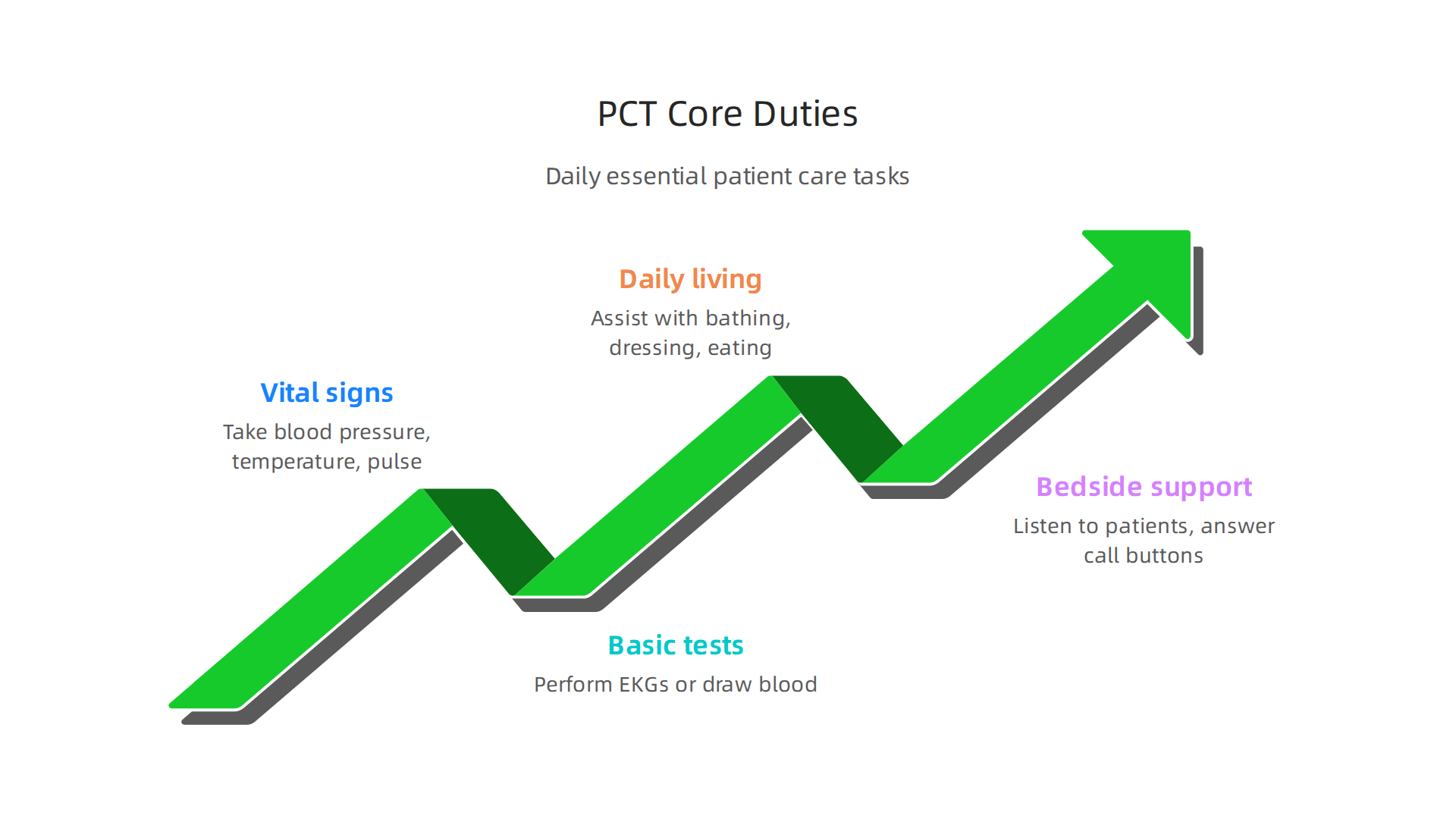
- Checking vital signs. You take blood pressure, temperature, pulse, and breathing rates. Then you record everything in the patient’s chart Patient Care Technician Job Description [Updated for 2026] – Indeed.
- Running basic tests. You might perform EKGs to check heart health or draw blood for lab work.
- Helping with daily living. Many patients cannot bathe, dress, eat, or move around on their own. You step in to help with dignity and respect Guide To Becoming a Patient Care Technician (PCT) – Better Nurse.
- Providing bedside support. You listen to patients, answer their call buttons, and report changes in their condition to the nursing team.
Where You Will Work
The best part about searching for pct jobs is the variety of places you can work:
- Hospitals. Many PCTs start in medical-surgical units, the emergency room (ER), or the intensive care unit (ICU).
- Nursing homes and long-term care. These settings have a huge need for caring technicians right now.
- Outpatient clinics. You help with patient flow, minor procedures, and follow-up care.
- Home health agencies. Some PCTs visit patients at home to support recovery and daily routines.
The Patient Care Tech outlook for 2026 shows strong demand across all these settings Patient Care Tech Outlook & Trends – NHAnow.
This Role Opens Doors
Starting as a PCT does not mean you have to stop there. This role gives you real patient experience that employers love. If your goal is one of the highest paying medical tech jobs or even the highest paying pharmacy technician jobs down the road, this is a perfect stepping stone. Some people even use this foundation to aim for highest paying tech companies in the healthcare space. The point is, your career can grow as much as you want it to.
If you decide later that you want more responsibility, you can easily move into roles like LPN. We have a detailed guide on LPN jobs that shows you exactly how to make that leap.
Taking Your Next Step
If you already have healthcare experience or are just starting out, additional training can accelerate your career faster than you think. Careerist offers targeted programs that help you build the specific skills needed for higher-paying roles.
Ready to take the next big step? Get started with Careerist today and see how far you can go.
PCT vs. CNA vs. Medical Assistant: Key Differences and How to Choose
If you are exploring pct jobs, you have probably seen two other roles pop up everywhere: certified nursing assistant (CNA) and medical assistant (MA). They sound similar, but they lead to very different days at work. Let me sort them out so you pick the right path for your goals.
What Sets Them Apart
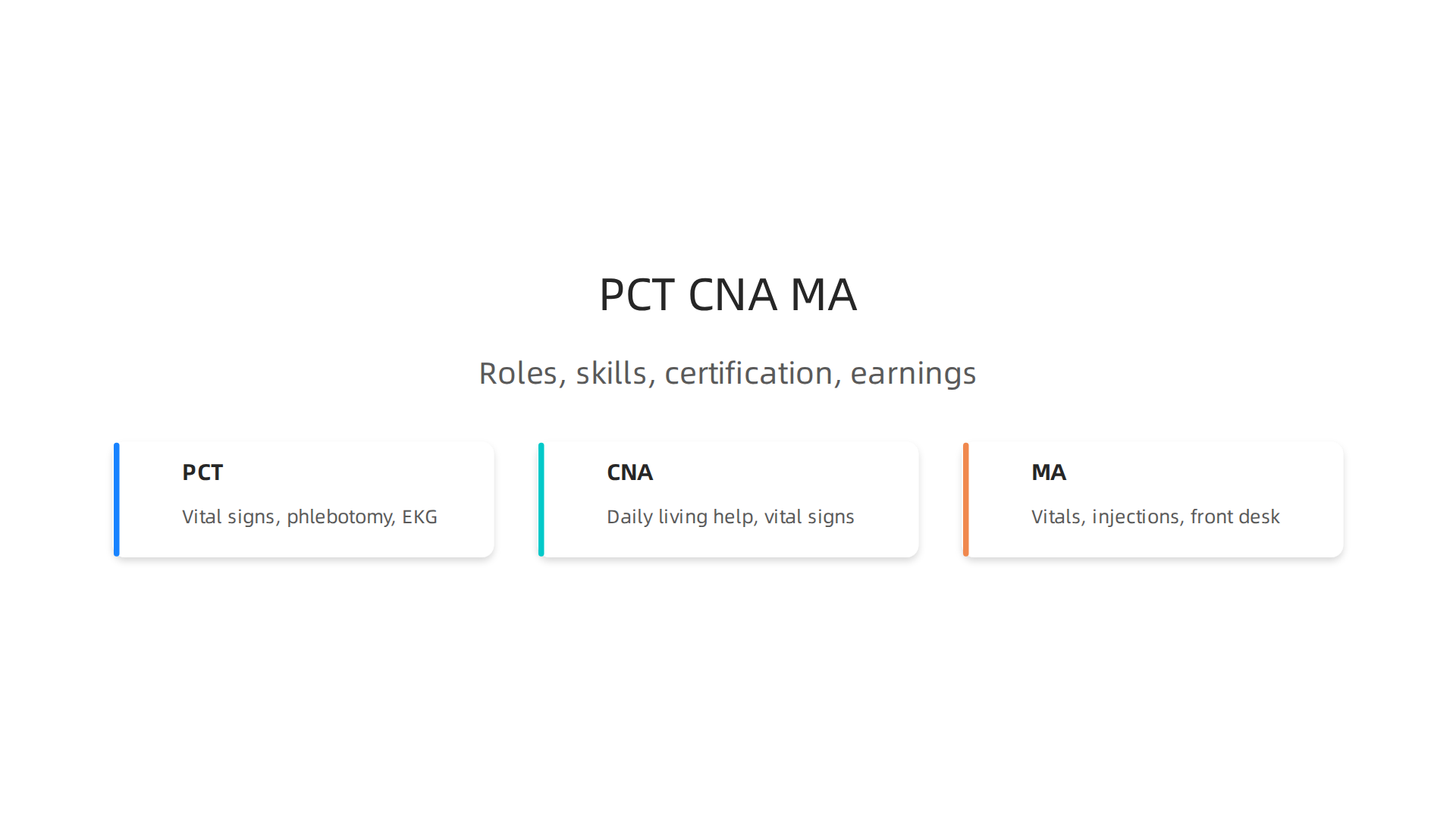
The biggest difference comes down to skills. A PCT does everything a CNA does plus more. You learn phlebotomy (drawing blood) and EKG (heart monitoring). CNAs focus mainly on basic daily care like bathing, feeding, and turning patients. Medical assistants split their time. They do some clinical tasks, but they also handle front-office duties like scheduling and billing.
Here is a quick comparison:
| Role | Main Skills | Certification Path | Typical Earnings |
|---|---|---|---|
| PCT | Vital signs, phlebotomy, EKG, daily care, patient monitoring | Requires additional certifications beyond CNA, often through programs like the one at CT State Community College that leads to NHA certification | Higher than CNA |
| CNA | Daily living help, vital signs, mobility support | State-approved training and competency exam | Entry level |
| MA | Vitals, injections, front desk, scheduling, billing | CAAHEP or ABHES accredited programs | Can exceed PCT in some settings |
Certification and Training
The path to each role is different. CNAs must complete a state-approved program and pass an exam. PCT programs build on that foundation with extra training in phlebotomy and EKG. Many programs, like the one at AIMS Education, include a clinical internship so you get real experience before you start job hunting.
Medical assistant training usually takes about one year and requires accreditation.
Salary and Job Growth
Pay varies by location, but PCTs generally earn more than CNAs because of their broader skill set. Medical assistants can earn more than PCTs in some private practice settings. All three roles are in strong demand in 2026. If you want to maximize earning potential, adding certifications is a smart move. Building the right skills can help you land some of the highest paying medical tech jobs down the road.
How to Decide
Ask yourself one question: Do you want hands-on patient care with advanced skills, or do you prefer a mix of clinical and office work?
If you enjoy direct patient contact and want to learn EKG and blood draws, go with PCT. If you like variety that includes administrative tasks, MA might fit better. If you want the quickest entry into healthcare, CNA is a solid starting point.
Your Next Step
No matter which role you choose, extra training helps you earn more and grow faster. Platforms like upGrad offer focused programs that build exactly the skills employers want in 2026. And if you need help polishing your resume before applying, check out our guide on 10 research-backed skills to put on resume so you stand out from the crowd.
Ready to take the next step? Sign up for CourseCareers and start building your future today.
How to Become a PCT: Certifications and Training Paths
So you want to land one of those pct jobs you read about. The path is simpler than you might think. Most patient care technician roles start with a high school diploma or GED. From there, you build on that foundation with one or more certifications.
What You Need to Get Started
First, you need a high school diploma or equivalent. Most programs, like the ones described by Stepful, require this as a basic step.
After that, you have a few routes. You can get a CNA certification first and then add phlebotomy and EKG certifications. Or you can enroll in a comprehensive PCT program that covers all three at once.
Accredited Programs to Consider
Community colleges and vocational schools are your best bet for hands-on training. The program at CT State Community College takes about 128 hours and prepares you for the NHA Certified Patient Care Technician (CPCT) exam. That credential is widely recognized by employers.
Other programs, like the one at AIMS Education, include a mandatory 180-hour clinical internship. You get real experience before you even start your job search.
Should You Go Online?
If you prefer flexibility, online platforms can help you prepare for the certification exams. Platforms like upGrad offer targeted training that builds the exact skills employers look for in 2026. Just make sure you also get hands-on practice through a local clinical site.
Where to Next
Once you finish your training and earn your certification, you will be ready to apply for the highest paying medical tech jobs in your area. Need a polished resume to go with your new credentials? Check out our guide on how to write a winning resume cover page to stand out in 2026.
Ready to take the first step? Sign up for upGrad and start your PCT training today.
CNA Certification as a Foundation
Here is a smart shortcut many people use. They start their healthcare journey by becoming a Certified Nursing Assistant (CNA) first. Actually, a lot of successful patient care technicians begin this way. It gives you a head start.
CNA certification usually takes 4 to 12 weeks of training. After that, you must pass a state exam. That is it. You are ready to work.
Why It Works So Well
The skills you learn as a CNA transfer directly into pct jobs. You already know how to take vital signs, help patients with daily tasks, and keep a calm bedside manner. Many comprehensive PCT programs even accept your CNA certification as a prerequisite. That means you can skip some basic classes and move faster.
Plus, holding a CNA credential makes your resume stronger when applying for the highest paying medical tech jobs in 2026. Employers see that you have real hands-on experience already.
If you want to polish your resume to highlight those transferable skills, check out our guide on 10 research backed skills to put on resume that employers want in 2026. It will help you stand out.
So if you are wondering where to start, the CNA path is a proven first step. It is quick, affordable, and opens the door to your PCT career.
Phlebotomy and EKG Certifications
The CNA path gives you a head start. But to really stand out for pct jobs, you need to add specialized skills. Phlebotomy and EKG certifications are the perfect next step.
Many PCT programs, like the one at CT State Community College, bundle these certifications together. You learn to draw blood safely and run heart tests in one complete package. If you train on your own, most standalone certifications take only 1 to 3 months.
Why does this matter? Hospitals and clinics in 2026 want multitasking pros. A CNA background plus phlebotomy and EKG skills puts you in line for the highest paying medical tech jobs.
Always choose a program that prepares you for a respected exam. Employers trust credentials from organizations like ASCP, NHA, and CCI. Passing their tests proves you know your stuff.
Once you hold these certifications, you are ready to apply. A strong resume and a clear job search plan are your next steps. Our guide on how to find full-time jobs in 2026 walks you through everything you need to land your first PCT role.
Comprehensive PCT Certification Programs
You do not have to take separate classes for CNA, phlebotomy, and EKG. Comprehensive PCT programs bundle all these core skills into one single course. You learn patient care, blood draws, heart monitoring, and acute care techniques together.
Most programs take 4 to 9 months to finish. In 2026, many schools offer the classroom portion online through programs like the one at CT State Community College. This gives you more flexibility if you are working or have family commitments. You still need hands-on practice though. Accredited programs arrange clinical placements so you get real experience with patients.
Once you finish, you are ready for the exam. For tips on what to study, check out these helpful PCT certification test training tips.
Adding this comprehensive certification to your resume is one of the best ways to qualify for the highest paying medical tech jobs in your area. To make your application stand out for these pct jobs, you need a solid resume. See what employers want in our guide on 10 research-backed skills to put on resume.
Some professionals use their patient care background as a launchpad into health tech. CourseCareers helps you gain the specific skills needed to make that transition smoothly.
PCT Job Market and Salary Outlook for 2026
So you have your certification in hand. Now the big question: Are there enough jobs? And how much can you actually earn as a patient care technician in 2026?
The short answer is yes. The demand for healthcare workers keeps rising. According to the Bureau of Labor Statistics, overall healthcare employment is growing much faster than the average for all jobs from 2024 to 2034.
For nursing assistants and orderlies, the BLS projects about 4% growth through 2034. But for patient care technicians specifically, the outlook is even brighter because hospitals and outpatient clinics are looking for multi-skilled workers who can handle blood draws, EKGs, and basic patient care in one role.
A report from Dreambound notes that there are roughly 211,800 new PCT openings each year. That is a lot of opportunities for people entering the field.
What about pay?
The median annual wage for a patient care technician in the US is around $38,000 to $39,000. For example, the Ultimate Medical Academy calculates that a full-time PCT earning the national median takes home about $2,525 per month. Stepful reports an average of $21.15 per hour as of March 2026, which comes out to roughly $44,000 a year if you work 40 hours a week. So the numbers vary depending on who you ask and where you live.
Location matters a lot. In Chicago, the average PCT salary is about $46,943 per year, according to Glassdoor. Workers in hospital settings tend to earn more than those in long-term care facilities. Outpatient clinics also pay well because they need technicians who can handle multiple tasks.
While this role is one of the highest paying medical tech jobs without a college degree, it is smart to compare it to other options like the highest paying pharmacy tech jobs or highest paying pharmacy technician jobs. Pharmacy technicians often earn similar or slightly higher wages, but PCT work offers more direct patient contact. Some of the highest paying tech companies also have health-related roles, but those usually require very different technical skills.
If you are aiming to land one of these pct jobs, having a targeted job search plan helps. Check out our guide on how to find a job in 2026 to learn the best strategies for your area.
Want to boost your earning potential even more? Adding extra certifications can open doors to higher pay. upGrad offers flexible online programs that help healthcare workers gain specialized skills and advance their careers faster. Signing up is a simple step toward a more rewarding future.
Top Online Programs and Courses for PCT Certification
Now that you have a clear picture of the job market and salary, the next step is finding the right training. Online programs make it easier than ever to earn your Patient Care Technician certification on your own schedule. In 2026, many accredited platforms offer flexible courses that prepare you for the NHA exam.
What to look for in a program
Not all online PCT programs are equal. When comparing options, focus on a few key things:
- Cost and payment plans – Some programs charge upfront fees, while others let you pay monthly.
- Duration – Self-paced courses can take anywhere from a few weeks to a few months.
- Clinical placement assistance – Hands-on practice is required for most certifications. Make sure the program helps you find a clinical site.
- Exam prep included – The best programs bundle study materials and practice tests for the NHA Certified Patient Care Technician/Assistant (CPCT/A) exam.
- Accreditation and pass rates – Programs accredited by DEAC or regional bodies are more trusted by employers. High NHA pass rates are a strong signal of quality.
Top online platforms to consider
Here are a few well-known options based on research and user reviews:
| Program | Key Features | Cost |
|---|---|---|
| US Career Institute | 100% online, self-paced, DEAC accredited, can be completed on your phone | $69 per month with a 5-day money-back commitment |
| Stepful | One of the cheapest PCT programs, includes live classes and clinical placement | Low upfront cost, financing available |
| CareerStep | Comprehensive online training covering patient care, phlebotomy, and EKG | Contact for pricing, offers payment plans |
| University of Texas at Arlington (UTA) | Voucher included for NHA or AMCA exam, designed for career changers | Varies, check website |
| Ultimate Medical Academy (UMA) | Prepares you for both CPT and CPCT/A certifications, strong support | Contact for pricing |
Each of these programs meets NHA standards, but your choice should depend on your budget and timeline. For example, US Career Institute’s self-paced model works well if you have a full-time job, while Stepful’s live classes might suit learners who want structured guidance. You can read more details in Stepful’s breakdown of the cheapest PCT programs.
Boost your exam readiness
Once you enroll, getting exam-ready is critical. Watch this PCT test training tips video to understand the format and key topics. It covers vital signs, EKG, phlebotomy, and patient care scenarios that frequently appear on the NHA exam.
Going beyond PCT certification
After you earn your certification, consider adding complementary skills to stand out in the job market. For instance, learning electronic health records or basic healthcare data analysis can make your resume stronger. Programs like Udacity offer career-oriented nanodegrees in tech fields that pair well with healthcare roles. If you want to explore additional training to boost your earning potential, check out Udacity’s nanodegree programs.
Next step: build your resume
Once you finish your training and pass the exam, it’s time to start applying for pct jobs. Having a clean, ATS-friendly resume is essential. Use a simple resume template to make sure your application gets noticed by hiring managers.
If you are ready to jump into a structured training program that helps you land healthcare roles fast, sign up for CourseCareers today. Their programs are designed for people who want a clear path from training to employment.
Tips for Landing Your First PCT Job
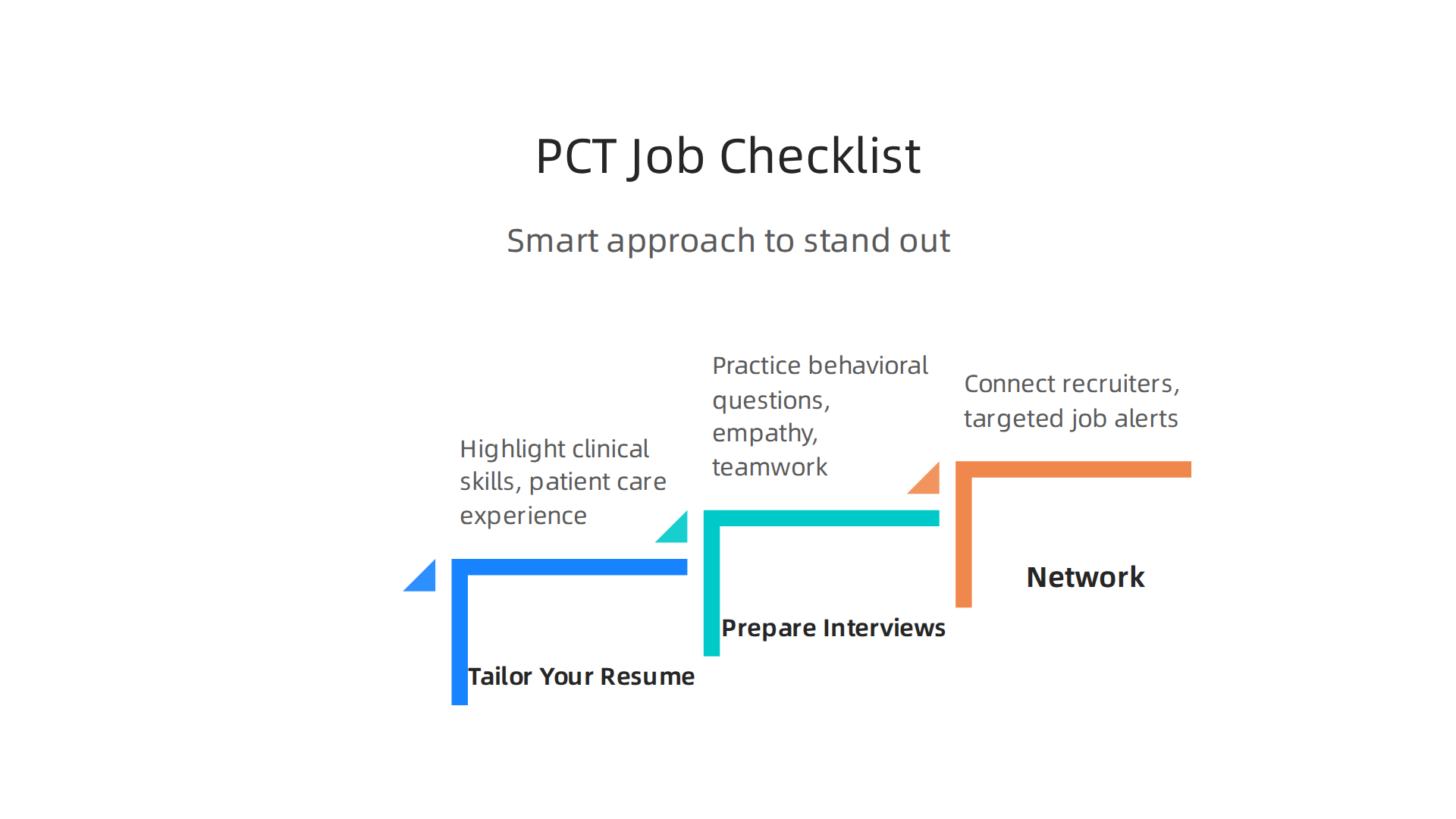
You earned your Patient Care Technician certification. Now comes the next challenge: getting that first job offer. The good news is that the job outlook for pct jobs is strong. The Bureau of Labor Statistics projects healthcare occupations will grow much faster than average through 2034. So opportunities are there. But you need a smart approach to stand out.
1. Tailor Your Resume to Clinical Skills
Hiring managers scan resumes for hands-on abilities. Make sure yours highlights things like taking vital signs, running EKGs, and drawing blood. Even if you only practiced these in a clinical setting during training, list them clearly. Include any patient care experience too, including volunteer work at a hospital or nursing home.
Keep your resume clean and ATS-friendly. Many hospitals use applicant tracking systems that filter resumes. A simple resume template helps you pass those first checks.
2. Prepare for Behavioral Interview Questions
Expect questions that test your empathy, teamwork, and ability to handle stress. For example:
- "Tell me about a time you helped a scared patient."
- "How do you stay calm when a patient is uncooperative?"
- "Describe a time you worked closely with a nurse or another tech."
Practice your answers out loud. Use real examples from your training or volunteer work. Keep them short and honest.
3. Network and Use Targeted Job Boards
Connect with local healthcare recruiters on LinkedIn. Many hospitals post pct jobs before they go public. Also check job boards that focus on allied health. A data-driven job search approach can help you find openings faster.
Don’t overlook general boards like Indeed and Glassdoor either. But set up alerts for "Patient Care Technician" near you.
Build for the Long Term
Landing your first PCT job is a big win. Over time, you can grow your skills and move into higher roles. Some patient care technicians later shift into tech careers within healthcare. For example, learning health IT or data systems can lead to some of the highest paying tech companies in the industry. If that path interests you, Careerist offers training to make the leap into tech roles.
Career Advancement: From PCT to LPN, RN, and Beyond
So you landed your first Patient Care Technician job. That is a real achievement. But what comes next? Your PCT role is actually a powerful launchpad for bigger opportunities. Many technicians use their clinical experience to take the next step up the career ladder.

Your daily work as a PCT gives you a huge advantage. You already know how to take vital signs, run EKGs, and draw blood. That hands-on experience is exactly what nursing schools and advanced training programs look for. Some employers even offer tuition reimbursement to help you move forward. Programs like the one at Ultimate Medical Academy prepare you for the next level of certification and beyond.
One of the most common paths is becoming a Licensed Practical Nurse (LPN). Many PCTs transition into LPN roles because their clinical hours often count toward nursing school requirements. You can read a step-by-step guide on how to land an LPN position if that path interests you.
Bridge programs like PCT-to-RN can also shorten your journey. They recognize the training you already have, so you do not start from scratch. Instead of taking a full nursing program from the beginning, you can skip past the material you already know.
Another option is to specialize further. You can focus on dialysis, cardiac care, or even train as a surgical technician. These roles often come with higher pay and more responsibility. They are some of the highest paying medical tech jobs in the field.
If you are thinking about long-term growth, some patient care technicians eventually shift into healthcare technology roles. That move can lead to positions at the highest paying tech companies. Learning new skills through platforms like upGrad can help open those doors.
Wherever you want to go next, your PCT job is a strong foundation. Every shift you work builds experience that counts toward your next career step.
Frequently Asked Questions About PCT Jobs
You have learned how a PCT role can grow into a bigger career. But maybe you still have some practical questions. Here are the answers to the most common questions about pct jobs. We cover experience, salary, schedules, and interviews.
Can I work as a PCT without any prior experience?
Yes, you can. Many people start pct jobs with zero healthcare experience. Training programs teach you directly. Some hospitals even pay you to learn on the job. What matters most is your attitude and willingness to help others. If you do not have a college degree, that is fine too. You can find jobs that do not require one. Check out this guide on finding jobs near me no degree for more ideas.
How much do PCT jobs pay in 2026?
Salaries depend on your state and the type of facility you work in. Most PCTs earn between $32,000 and $47,000 per year. Working night shifts or weekends adds extra pay. Some PCTs eventually move into the highest paying medical tech jobs after gaining more skills. If you want to earn more, adding phlebotomy or EKG training really helps. A strong resume also helps you negotiate better pay. Use this simple resume template to build one today.
What is the difference between a PCT and a nurse aide (CNA)?
A PCT does more than a CNA. You learn to draw blood, run EKGs, and handle advanced equipment. CNAs focus on basic care like bathing and feeding. That is why pct jobs often come with higher pay. If you want to go even further, you can train for roles at the highest paying tech companies in healthcare IT.
How do I prepare for a PCT interview?
Employers want to know your motivation and how you handle stress. They ask questions like "What is the biggest challenge in patient care?" Reviewing sample answers helps you feel ready. Indeed has a helpful list of PCT interview questions with sample answers. You can also watch a YouTube video on PCT interview questions for extra practice.
What are the shifts and schedules like?
Expect 12-hour shifts. Healthcare runs 24 hours a day. You will likely work weekends and holidays in the beginning. Many PCTs actually like this schedule because it gives them more days off during the week. The overtime pay is usually good too.
Ready to start your training?
If you are ready to build your skills and land a pct job, getting the right training is the first step. Many people choose to sign up with CourseCareers to start their healthcare journey today.
Summary
This article is a practical guide to patient care technician (PCT) jobs, showing why they’re a fast, stable entry into allied health and how to build a career from the ground up. It explains what PCTs do day to day, where they work, and how PCTs differ from CNAs and medical assistants. The guide walks through certification routes—CNA first or comprehensive PCT programs—plus phlebotomy and EKG training, online options, and what to look for in a course. You’ll also get concrete job-search advice: how to write a clinical resume, prepare for interviews, and target high-demand employers. Finally, it covers salary ranges and the 2026 job outlook and outlines clear advancement paths to LPN, RN, specialty roles, or health‑tech careers.